


When you’re photographing a family, you’re not just documenting what they look like, you’re capturing how they feel together. You are wanting natural family poses.
Every family has its own rhythm, energy, and connection. If that connection isn’t present in the image, what you’re left with is simply a well-arranged group of people in nice outfits. And while that might look polished, it rarely feels meaningful.
The goal isn’t perfection. It’s presence.
I want my clients to walk away with images that feel like them… not stiff, posed versions of themselves, but something honest and emotionally true. The kind of photograph that brings them right back to that season of life.
That’s where intentional posing comes in.
Yes, I absolutely pose my clients, but the magic happens in what comes after. I guide them into a starting position, then prompt interaction so the connection unfolds naturally.
If you’re ready to move beyond rigid posing and create more emotive work, these are five simple techniques you can start using right away for natural family poses.

1. Movement Together
Instead of asking everyone to stand still, bring in movement right away.
Have the family line up side by side and hold hands. Then invite them to move—sway, dance, or take a few steps together. Encourage them to look at each other instead of the camera.
Some families will go all in, others will keep it subtle, but either way, it creates connection and breaks that initial stiffness almost instantly.

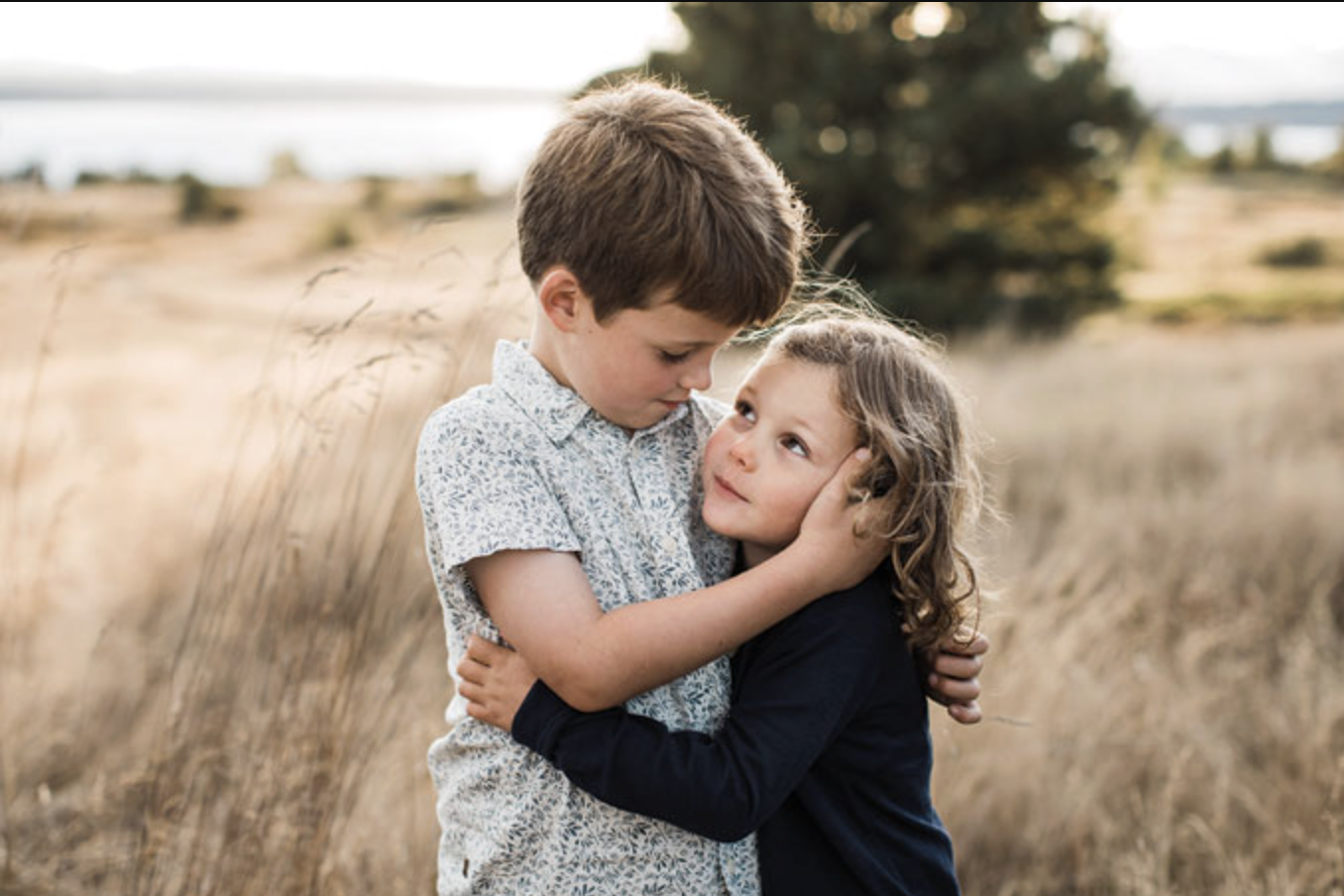
2. Close, Connected Embrace
Bring everyone in physically close, either standing or seated, and guide their bodies to face inward toward one another.
Once they’re in position, prompt them to pause and take each other in. I often use a cue like, “Just soak this in for a second.”
It may feel a little cheesy, but parents almost always lean into it. The key here is to keep their focus on each other, not you. This is what creates those intimate, emotional frames.

3. Playful Interaction (Tickling Works Every Time)
If you want genuine laughter, you have to create space for play.
Have the family sit close together, with younger kids on laps if needed. Then invite the parents to interact tickle, cuddle, or play gently with their kids.
Remind them to keep their attention on their children rather than the camera. This is where the most natural expressions happen.
Just keep an eye on positioning so faces stay visible and connected.

4. Guided Freedom for Kids
At some point, especially with younger children, you’ll feel their attention start to fade—and that’s not a problem.
Instead of fighting it, lean into it.
Place the family in an open area with beautiful light and give the kids permission to move within a defined space. For example, you might say, “You can run and play between this tree and that path.”
While the kids move, guide the parents to stay close, hugging, watching, or engaging with each other. This creates a mix of movement and stillness that feels incredibly real.
Shooting a bit wider here can help tell more of the story.

5. Layered Connection (The “Shoulder” Setup)
This is a great pose for adding dimension and variety.
Have one parent (often Dad) lift a child onto their shoulders. Then bring the other parent in close, hugging or leaning into them. If there are multiple children, layer them in naturally by holding hands or standing nearby.
From there, prompt connection, maybe a kiss between parents, or even the child leaning down to interact.
This setup creates multiple points of connection within a single frame, making the image feel full and dynamic.
Final Thoughts
Family photography doesn’t have to feel stiff or overly structured.
When you combine thoughtful posing with intentional direction, you give your clients space to relax, connect, and simply be themselves. That’s where the real moments live.
These are the kinds of images that last because they aren’t just seen, they’re felt.
Looking for more? Download my family posing guide now!








Read the Comments +