


There is an electric energy that only happens at a photography conference. You’re surrounded by thousands of peers, the gear is top-tier, and the air is thick with the desire to “make it.” But behind the flashing lights of the stage, what does it actually take to build a career that lasts?
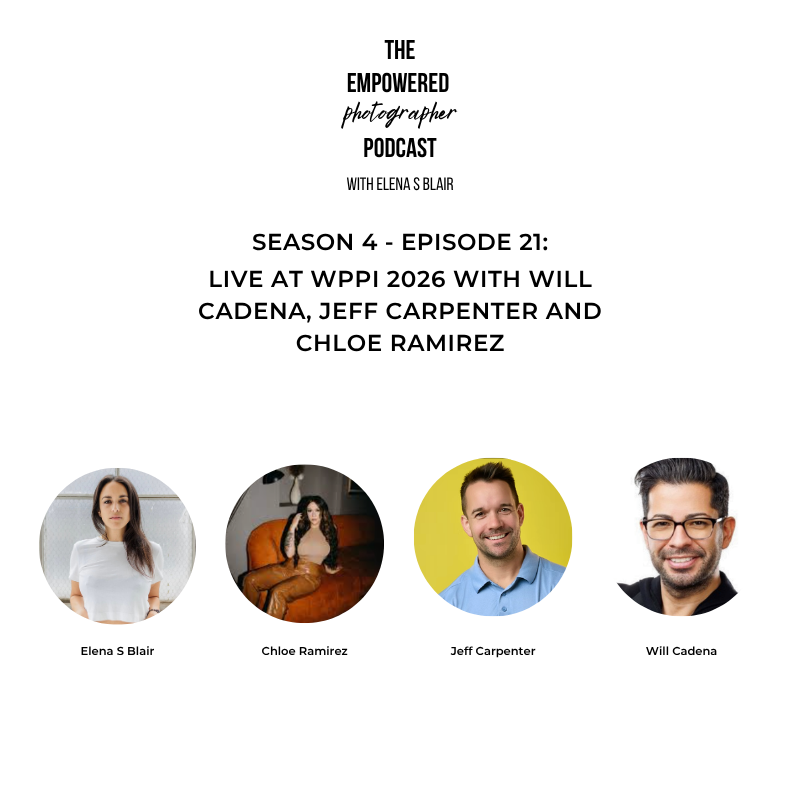
Recently, I had the honor of joining a powerhouse panel at WPPI 2026, hosted by the incredible Will Cadena. Alongside fellow educators Jeff Carpenter and Chloe, we dove deep into the “unsexy” side of success: imposter syndrome, burnout, and the grit required to stay in the game for over 16 years.
The “Imposter” in the Room
We started the session with a heavy hitter: “Do you remember the first time you were in a room where you felt like you didn’t belong?”
For me, that was WPPI 2012. I was a family and newborn photographer in a sea of “sexier” genres like high-end weddings and commercial advertising. I felt like an outsider, but I decided right then to be “scrappy.” I realized that being the “dumbest” person in the room is actually a superpower, it’s the fastest way to learn.
The 10-Year “Overnight” Success
Social media makes success look instantaneous, but the reality is much slower. I shared with the audience that it took me ten years of showing up and being “annoying” before I landed my sponsorship with Canon.
Whether it’s getting a major brand to notice you or scaling your studio to six figures, persistence is the only variable you can truly control. You have to fight for what you want until the industry has no choice but to pay attention.
Strategy vs. Mindset
As a business coach, I’m known for my strategies on school photography and profitable family sessions. But during this panel, we all agreed on one thing: Strategy is useless without the right mindset.
I often tell my students, “Come for the strategy, leave with the mindset.” You can build the most beautiful marketing funnel in the world, but if you have a “starving artist” mentality or limiting beliefs about money, that funnel will stay empty. You have to give yourself permission to succeed before the clients will.
Breaking the “Hamster Wheel”
We also tackled the toxic myth of the “4-hour workweek.” The truth? Successful photographers work hard. However, there is a difference between working hard and spinning your wheels in a “hamster wheel” of burnout.
We discussed how to:
- Lean into the rhythm: Embrace the “insane” busy seasons (like Fall for family pros) while scheduling hard stops for rest and family.
- Find a passion project: Jeff and Chloe shared how “non-photography” hobbies, like mechanic work or loud music, are essential for recharging the creative battery.
- Book yourself as a client: Taking an hour or a day for yourself isn’t a luxury; it’s a business requirement.
Final Thoughts
The most rewarding part of the photography conference experience isn’t the gear, it’s the lightbulb moments. Whether it’s a student finally “getting” off-camera flash or a photographer realizing they can actually make $200k a year, those breakthroughs are why we do what we do.
Want to hear the full, unedited conversation? Tune into the latest episode of The Empowered Photographer to hear the full panel discussion from WPPI!







Read the Comments +